From Research to MVP Priorities
Caregiver Discovery
I conducted discovery interviews and workflow research with caregivers to understand care-management challenges, identify unmet needs, and guide MVP priorities.
Concept & Workflow Evaluation
I conducted evaluative research and usability testing to assess concepts and workflows, translating findings into recommendations for the caregiver experience.
Product Strategy & Scope
I partnered with founders, engineering, and product stakeholders to translate research insights into product strategy, feature priorities, and MVP scope.
Beyond Documentation
How do we make care coordination feel human, connected, and manageable?
Reframing the problem
At first, it looked like a data problem. But the deeper issue was human: care managers were drowning in tools that didn’t reflect how care actually happens.
We reframed our design question from:
“How do we track care?”
to
“How do we make care coordination feel human, connected, and manageable?”
That shift helped us prioritize clarity, flexibility, and trust as our design principles.
Showing both care manager and parent perspectives reveals how design decisions affect each side of the care relationship—and where their needs intersect or diverge

Care Manager Persona
We also looked at the emotional layer: families who felt lost in the maze of specialists, medications, and scheduling

Care Giver/Parent Persona
Designing Around Real Work
I designed the Care Plan’s structure, navigation, and interactions to bring patient context, priorities, and care activities into a connected workspace. Care coordinator walkthroughs helped me refine the layout and workflow.
Care Coordinator Prototype Walkthroughs
I walked through Care Plan prototypes with care coordinators to gather feedback on information organization, navigation, and support for calls with families. Their feedback informed refinements to the layout and workflow.
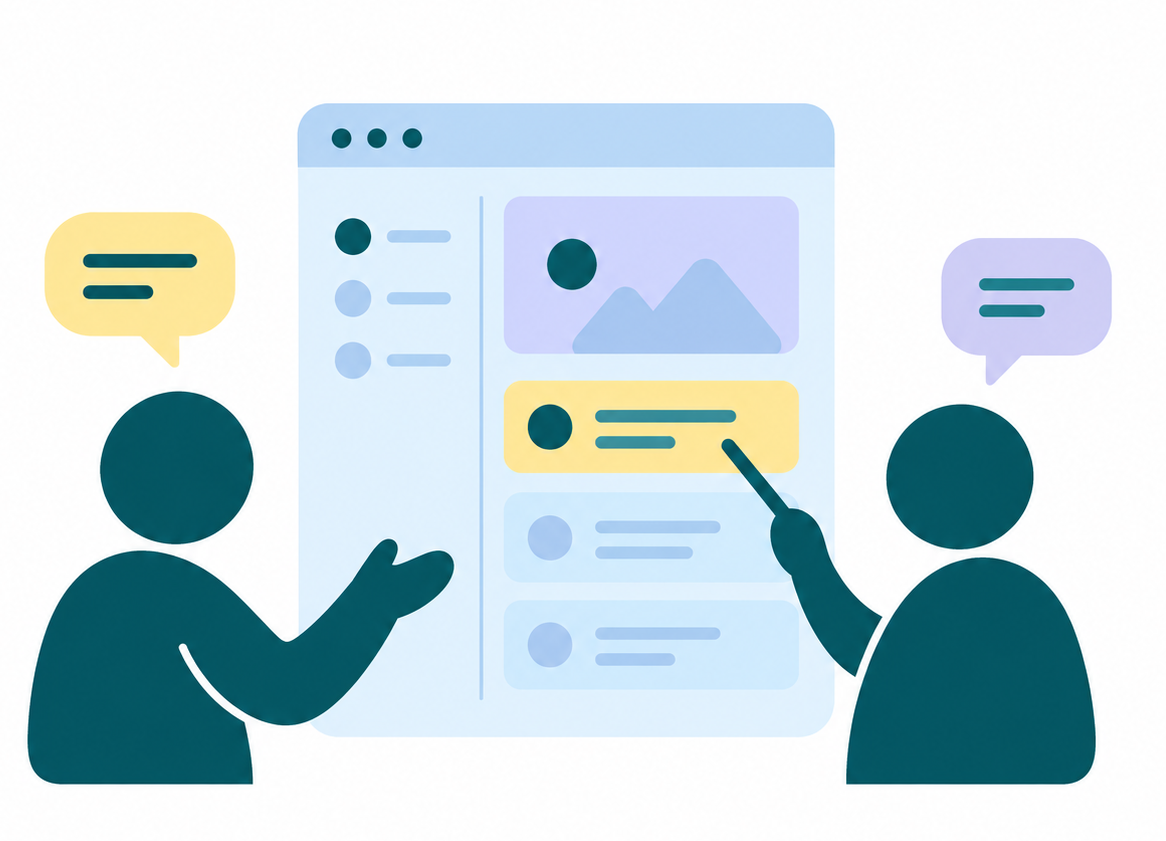
Workflow & Information Architecture
I mapped how information and actions moved between people and tools, then used that structure to organize the Care Plan around care activities and relevant patient context.

Layout & Interaction Design
Writing I developed a modular layout with distinct areas for patient context, section navigation, and care-plan content, refining the structure to support movement between tasks during calls.

The Result
The Care Plan became the first production module in the platform and established the foundation for future releases.
Care plan in context of entire patient record with ‘dashboard’ showing immediate needs and updates

Detail of Care plan showing latest vitals readings from remote patient monitoring

The Care Plan launched successfully and quickly proved the value of a human-centered approach:
- Simplified workflows reduced redundant data entry and improved documentation accuracy
- Modular, intuitive layout allowed faster updates during calls and follow-ups
- Positive pilot feedback from care managers, who described the experience as “streamlined, clear, and finally made for how we actually work.”